LAOAG CITY, Ilocos Norte — Public markets in the Ilocos Region are gaining attention as potential tourism destinations, with initiatives in Laoag City and San Fernando City, La Union, seeking to connect visitors with local food, products, culture, and community livelihoods.
The approach aims to bring tourists beyond familiar landmarks and into places where local life unfolds daily. Public markets can offer visitors a closer look at regional food traditions, agricultural produce and small businesses while creating opportunities for vendors and local producers.
In Laoag, the city public market is among the country’s top three markets in the Department of Tourism’s (DOT) Market Tour initiative. San Fernando City, meanwhile, is one of three national pilot sites for the DOT’s Market Tourism: The Palengke Experience Program.
Ilocos Sur is also promoting local products and community enterprises through tourism festivals and cultural activities.
Laoag market earns national tourism recognition
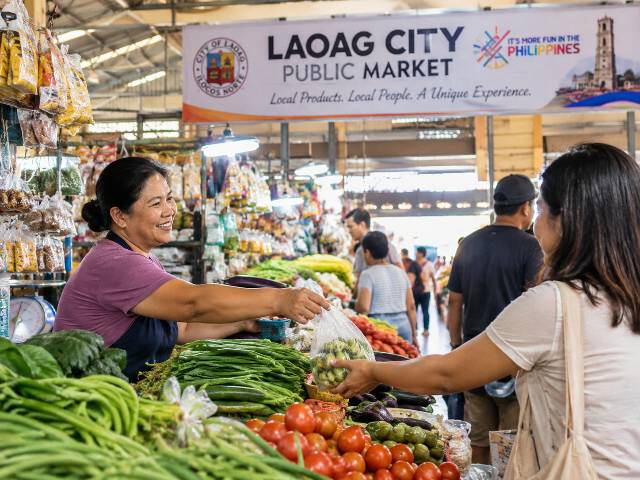
The Laoag City Public Market is being positioned as a place where visitors can experience local food, traditions and everyday community life.
In a September 22, 2026, report, the Philippine Information Agency (PIA) said the market was selected among the top three nationwide for the DOT’s Market Tour initiative following an assessment.
The initiative recognizes public markets not only as trading centers but also as places where visitors can discover local products, food practices, and cultural heritage.
According to figures reported by the city mayor, the market generated ₱37.18 million in revenue from July 2025 to June 2026, compared with ₱32.92 million in the previous 12-month period. That represents an increase of approximately 11.46%.
The figures highlight the market’s economic importance, but they do not establish that tourism activities caused the increase. The market revenue figures cover a specific reporting period, while the tourism initiative’s additional economic impact has yet to be established.
Visitors to Laoag can also find local products at the Alisto Sarabo Pasalubong Center at Aurora Park, another venue for promoting homegrown enterprises.
Source: Philippine Information Agency — Laoag City public market emerges as tourism gateway showcasing local life and flavors
San Fernando City looks to its public market
In San Fernando City, La Union, the public market has been selected as one of three national pilot sites for the DOT’s Market Tourism: The Palengke Experience Program.
A July 18, 2026, PIA report said more than 1,000 vendors and micro-entrepreneurs in the city stand to benefit from the initiative. This figure refers to potential beneficiaries; it does not mean that increased sales or income have already been demonstrated.
The planned tourism experience highlights locally grown produce, traditional kitchenware, and food-preservation practices that reflect Ilocano culture. The program also includes capacity-building and customer-service training to help vendors prepare for visitors.
The plan also includes tour packages linking public markets with nearby farms and traditional pottery workshops.
If developed effectively, these connections could give travelers more ways to explore local communities while creating opportunities for small businesses and producers to participate in the tourism economy. The actual results will depend on visitor demand, implementation, and the extent to which spending reaches local vendors.
Source: Philippine Information Agency — DOT pilots public market tourism in La Union to spur local economic growth
Ilocos Sur promotes local products through tourism
In Ilocos Sur, tourism promotion also includes efforts to showcase community-made products and create market opportunities for local producers.
The Ilocos Sur Tourism Festival 2026, held from September 9 to 27, brought together farmers, entrepreneurs, tourism workers, and product makers to feature local food, heritage, and skills.
One example the PIA highlighted was squash ice cream produced in Santo Domingo. The product provides an additional market for locally grown squash by turning agricultural produce into a value-added food item.
Such products can give visitors a reason to explore local communities and offer farmers and small enterprises another way to reach consumers.
However, the available report does not quantify how much additional income the festival or featured products generated. The example illustrates a potential connection between tourism and local livelihoods, rather than proof of a measured province-wide economic gain.
Source: Philippine Information Agency — Ilocos Sur harnesses tourism to boost livelihoods, local products
Turning tourism plans into measurable benefits
The three initiatives point to a broader opportunity for the Ilocos Region: making public markets and locally produced goods part of the visitor experience while supporting the communities behind them.
But attracting attention is only one part of the challenge. The long-term value of market tourism will depend on whether it brings additional customers to vendors, creates reliable opportunities for farmers and small enterprises, and encourages visitors to buy local products.
Useful indicators include visitor numbers; vendor sales before and after program implementation; participating businesses; purchases from local producers; and jobs created or sustained.
For market vendors and local communities, the key question is not simply whether public markets can attract tourists. The key question is whether tourism can generate lasting, fairly distributed economic opportunities while preserving these markets’ everyday role as essential places to shop, trade, and earn a living.